
Celebrating Rochester’s Literary Heritage – with Charles Dickens’ Writing Chalet
Reinventing a ‘remarkable house of literature’ as a ‘house of remarkable literature’

There is now a glimmer of hope. It may be possible to restore Charles Dickens’ Writing Chalet. In order to justify the cost & effort that this will require, it is essential that the Chalet becomes more than a ‘street ornament’.
For more about the Chalet’s history visit my blog: Dickens Writing Chalet.
————————–
As deserving as Dickens might be of having a monument, it would also be a waste of money as well as a wasted opportunity, if the Chalet became no more than an ‘exhibit’.
This is the first of a series of blogs in which I will float ideas as to how a restored Chalet could be utilised to benefit many different sections of the community – and in different ways. In this blog I want to present a case for the Chalet becoming a vehicle to inspire writers of today and tomorrow, and storytellers. Dickens’ interest’ in drama and desire to create stories, may well have arisen from when he visited the Theatre Royal, on Star Hill Rochester.
“One of the most remarkable houses of literature”
The press once describe Dickens’ Chalet as “one of the most remarkable houses of literature”. This accolade could be enhanced if it was also used to celebrate other writers, with a Rochester connection, who have made a significant contribution to our literary heritage. Their style of storytelling was as important as their plots in establishing them as successful writers.
To following outlines the contribution that local writers have made to our national literary heritage. They are presented in the order of their ‘year of birth’ – not on any particular merit.
Anne Pratt (1806 – 1893) – Writer who popularised the study of botany
Pratt was not a novelist but she was one of the most popular authors of her time. She was a most prolific botanical artist and writer. Pratt was educated at Eastgate House, Rochester, where she probably developed her skills as an artist. However her knowledge of botany was largely self-acquired.

Pratt popularised botany through her beautifully executed, scientifically accurate drawings of plants and flowers. However, by including in her books information of popular interest – such as romantic folklore and anecdotes – she ensured her work appealed to a wide audience – including, apparently, Queen Victoria.
Some of Pratt’s books were specifically designed for children and included elements of self-teaching – presumably drawing on her own experience? For more about Anne Pratt visit my blog dedicated to her. Anne Pratt – Celebrated Victorian Botanist
Charles Dickens (1812 – 1870) – Serial writer, storyteller and the inventor of the cliff-hanger
Dickens did far more for literature than write some ‘good stories’. Early in his life reading would not have been high, if at all, on the list of recreational activities of working class people. However, by publishing his novels in serial form he made them affordable to the working people.
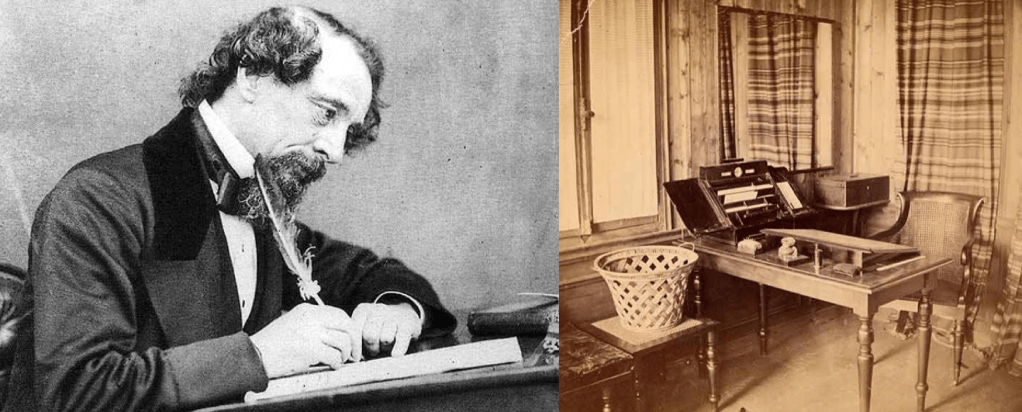
When Jane Austin published Pride & Prejudice in 1813 it cost 18s [£55]. In the 1850s when Charles Dickens published his works in monthly installments (“books in parts”), they were aimed at the middle classes, and typically cost 1s [£5]. He also published stories in his weekly journal ‘Household Words’ which cost only 2d [75p].
Dickens wrote about some dark societal issues. However, he wrote about them in an engaging way that ensured he retained the interest/engagement of his readers. He did not ‘preach’ in his novels about inequalities or injustices, but enabled his readers to develop their own realisation.
By writing in serial form, including contemporary issues and ending each instalment with a ‘cliff-hanger’, he retained the interest of his readers between instalments – and thereby ensured the next ‘chapter’ was purchased …. and income assured.
Charles Dickens was,, elected a member of the ‘Society for the Encouragement of Arts, Manufactures and Commerce (Royal Society of Arts) on November 28, 1849.
William Knighton LLD 1823 – 1900 – Historian, travel writer, social commentator, latter-day campaigner?
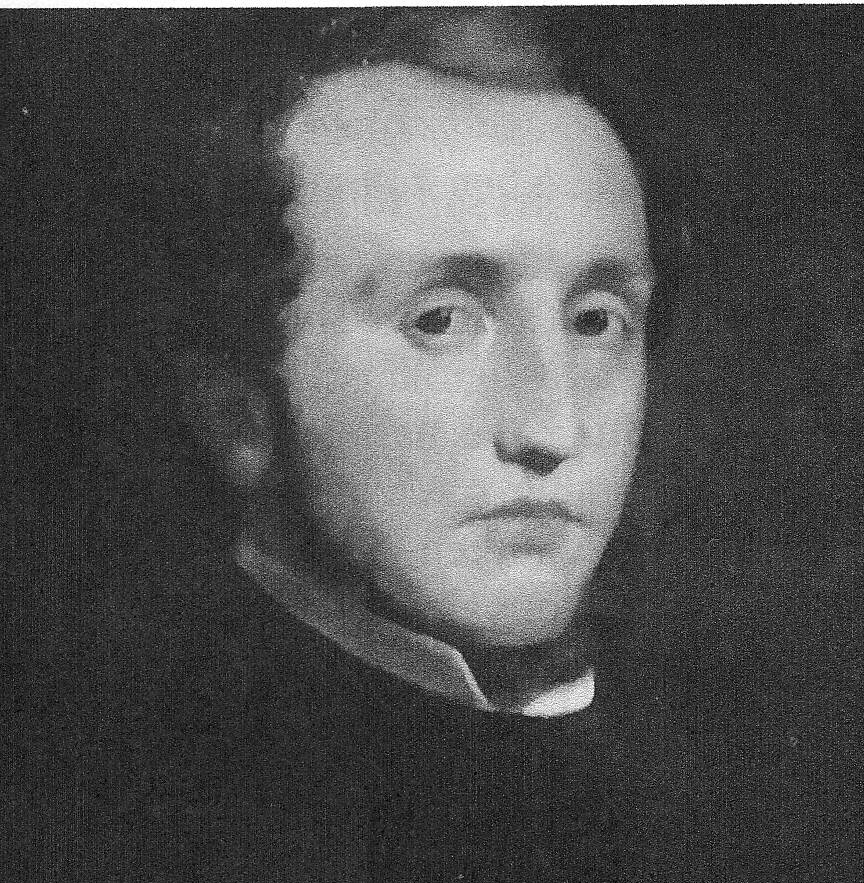
William Knighton and his wife Louisa Agnes (née Dahan) ran a school for girls in Eastgate House, Rochester. They ran the school, certainly between 1871 and 1875. The house was advertised as being for let early in 1876.
Knighton’s career involved managing coffee plantations in Ceylon (Sri Lanka), and as a civil servant, he became the Assistant Commissioner in Oudh, India. His career also included academic positions.
Literary reviewers at the time regarded his book “Struggles for Life”, published in 1888, as his most significant work. In this book, he addressed social and political problems here and overseas. His aim was to “awaken philanthropic action in the endeavour to ameliorate and remove them.” He also wanted to highlight “the strenuous endeavours which civilisation is everywhere aiming to remove abuses of the past, and to palliate the sufferings of the present”.
Knighton – the thinking-person’s Dickens?
Whereas Dickens highlighted social problems in his novels, Knighton described them. In Chapter One of “Struggles for Life”, he described the impoverished life of the poor living in Bermondsey, London, and highlighted the failure of politicians to tackle the problem. Other chapters address sociopolitical problems that we would recognise today.
Amongst other works by Knighton are, “The History of Ceylon”, “Forest Life in Ceylon“, and “The Private Life of an Eastern King“.
Knighton became the Vice-President of the ‘Royal Society of Literature RSL). Its aim was reward literary merit and excite literary talent. The RSL did not recognise Dickens during his lifetime. It now includes him amongst the greatest English writer.
Edith Nesbit (1858 – 1924) – Inventor of adventure stories for children
It is said that Nesbit invented realistic adventure stories for children that included strong female characters – but without the need for heroes / heroines.
She is best known for The Railway Children (1905). This was written whilst working on a trilogy of other novels for children: Five Children and It (1902) with Rochester references, The Phoenix and the Carpet (1904), and The Story of the Amulet (1906). Question – why was The Railway Children not included in the series?

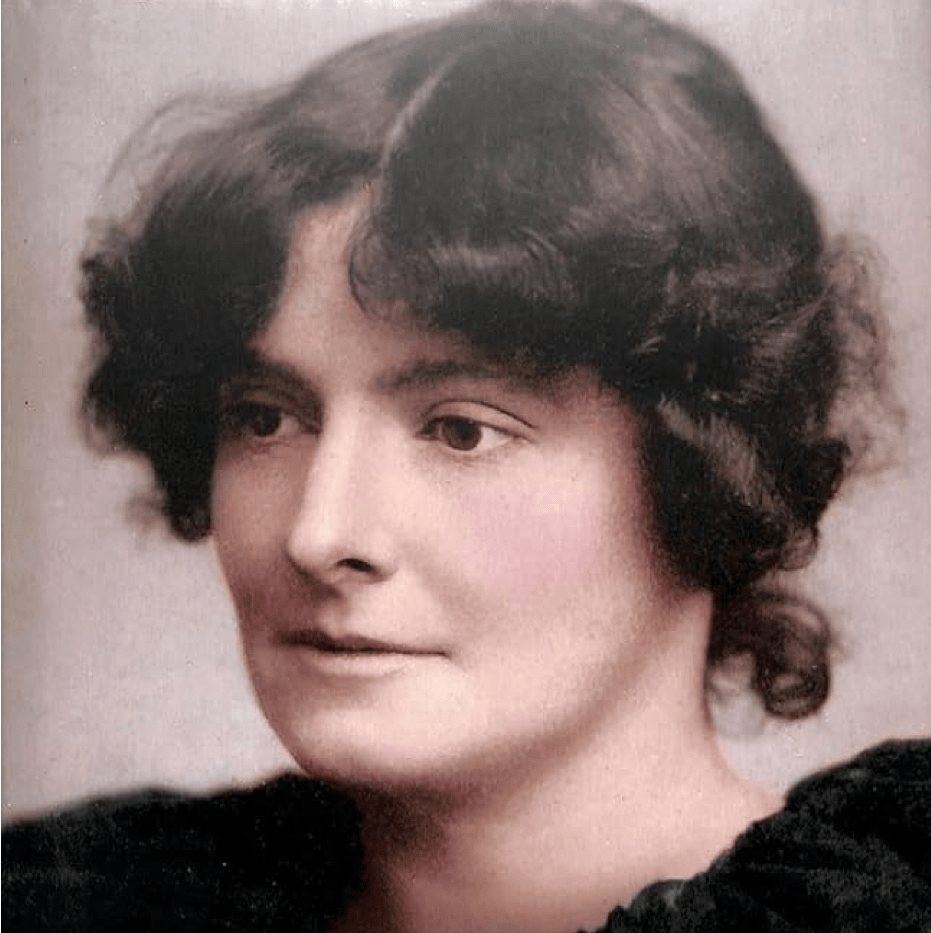
It is, though, the The Railway Children that has ‘stood the test of time’ – it has never been out of print, and has been made into films and serialised on TV.
Nesbit lived and visited the area around Rochester which featured in some of her writing. She was a founder member of the Fabian Society and developed strong female characters in her writing – both for adults and children. She was a feminist but did not support the suffragist movement as she believed the campaigning should be about getting the vote for all adults.
Edwin Harris (1859 – 1938) – Writer of historical novels
Harris’, a Rochester man, used ‘novels’ purporting to give an account of historical events that occurred at Rochester. He did this by adding imaginary context and narrative to real events – sometimes making it difficult to determine fact from fiction. Perhaps it could be said that he wrote a novel that masqueraded as a history?

‘Simon de Montfort and the Third Siege of Rochester Castle’ – Edwin Harris (1902)
Later in his life he wrote a what he called a sequel to The Mystery of Edwin Drood titled John Jasper’s Gate House (1932).
Russell Thorndike (1885 – 1972) — Writer of adventure and morality tales
Thorndike’s Dr Syn Series [Scarecrow series (1915)] introduced a ‘masked crusader’ – a smuggling vicar who disguised himself as a ‘scarecrow’ to defend local people from tyranny and injustice – a theme often repeated and continues to appeal to audiences.

The Dr Syn stories are set within the context of smuggling in 18th century on the Romney Marsh. Thorndike’s work has been adapted for radio and TV – the most notable being Disney (1963). Thorndike was born in Rochester and was the brother of (Dame) Sybil Thorndike.
Richard Austin Freeman (1862 – 1943)
The inventor of the ‘inverted’ detective story – and writer of a parody novel
It is claimed that Freeman invented the ‘inverted’ detective story. These stories start with the crime and the identity of the perpetrator. The narrative then follows the detective who investigates the ‘how & why’, as opposed to the more traditional route of determining ‘whodunit’. The Colombo stories are an example of this genre.

The Use of Parody
Parody novels tend to satirise classic works. Richard Freeman though may have parodied Dickens’ unfinished novel The Mystery of Edwin Drood as a means of offering an ending to this novel.
Freeman’s parody novel was “The Mystery of Angelina Frood” (1924). It was a departure from his usual style. It was not an ‘inverted’ detective story but still focused on solving the ‘how & why’ of a ‘disappearance’ – that of Angelina Frood.
In The Mystery of Edwin Drood it was Edwin who had disappeared and there was much speculation as to what had come of him. It is assumed that Edwin was murdered but as the novel was never finished Edwin’s fate remains a matter of speculation – but could Freeman, through his parodynovel have been offering a possible alternative ending by explaining the disappearance of Angelia Frood?
Placing a ‘cultural spin’ on classics
Other writers have also used parody to create interpretations of classics. Bollywood and Nollywood have both parodied works of Charles Dickens. Bollywood has adapted Great Expectations (Fitoor 2016) and there is Christmas Karma, a Bollywood inspired take on the Christmas Carol (2025). Nollywood has adapted or reimagined Dickens’ stories within a Nigerian context.
Enid Bagnold (1889 – 1981) – Feminist writer and playwright.
Bagnold was born at Rochester. Her novels had strong female characters – she’s best known for writing the children’s book – National Velvet (1935) – a story of a determined young girl who rode a horse she had won in the Grand National.

Bagnold also wrote about matters from a female perspective – childbirth and growing old. Her writing focused on emotions and offering psychological insights into relationships. She was born at Rochester.
Evelyn Dunbar (1906 – 1960) – Artist and “insistent feminist”
Dunbar grew up at Rochester and attended the Medway School of Art. She is best known as an artist. She was the only female salaried war artist during the second world war. She also wrote – often illustrating her own work – an example being Gardeners’ Choice (1938).

For more about Evelyn Dunbar visit my blog dedicated to her – Evelyn Dunbar Artist and Insistent Feminist
———————————
Celebrating Rochester’s Literary Heritage – with a ‘House of Remarkable Literature‘
Reinventing a ‘remarkable house of literature’ as a ‘house of remarkable literature’.
Hopefully it will be clear from the above that there is a local Literary Heritage worthy of celebration – although many local people / people of Medway may be unaware of the area’s link with the country’s literary heritage.
The Chalet could be used tell the story of bygone writers, and create opportunities for people to reflect on why the stories created decades ago still have resonance and relevance today.
This could be achieved though exhibitions, talks and small workshops – possibly held in Eastgate House, to protect the fabric of the Chalet – and perhaps by having writers in residence. This would would very much be attuned with Dickens. He encouraged other writers. He did this by publishing their work in his weekly magazines Household Words and All The Year Round. He welcomed contributions from female writers – including the first salaried female journalist Eliza Lynn Linton. He published works by Harriet Parr [pseudonym Holme Lee] and perhaps the better known Elizabeth Gaskell.
The aim would be to assist aspiring writers, of today and tomorrow, to think about the literary styles they could adopt to tell their stories … and perhaps make some money from their writing …. as a good plot – badly told/targeted – will not sell!
I’ve been contacted by Wendi who is writing a novel based on and around Charles Dickens’ Chalet. The story is called A Tale of Two Hittys. Click on the title to read some sample chapters.
What Next?
Please feel free to comment or add to this idea. I’m not a student of literature so may have overlooked local authors or oversimplified the significance of their writing. You may also like to look at my blog “Harnessing the Power of Story Telling at Dickens’ Chalet.“
Please email comments / suggestions to hello@charlesdickenschalet.co.uk as well as any support you feel able to lend to this proposal.
Please also visit charlesdickenschalet.co.uk to learn about the project and to register your interest in being kept informed as progress is made, or follow the project on Facebook.
The more support that can be demonstrated for saving, revitalising and repurposing the Chalet, the more likely potential funders / contributors are to support the project.
Geoff Ettridge aka Geoff Rambler
4 August 2025
Updated 27 Jan 2026
 Geoff Rambler's weird and wonderful Kent
Comments are closed.