A Vision for the Restored Writing Chalet of Charles Dickens?
Our ambitions for the Chalet must go beyond tourism.
Text in purple has been added since the blog was first posted.
For many years, I’ve been wanting to see Charles Dickens’ Writing Chalet restored and to have renewed purpose. To achieve this, though, a compelling case needs to be made for doing so, as the costs will be high. A relevant and deliverable vision for the Chalet will also be essential to engage with ‘high-value’ donors.
As important as the small donations are, it would take a long time to raise the amount of money required. The Chalet is in a rapidly deteriorating condition. It may not survive long enough to benefit from small-scale fundraising activities.
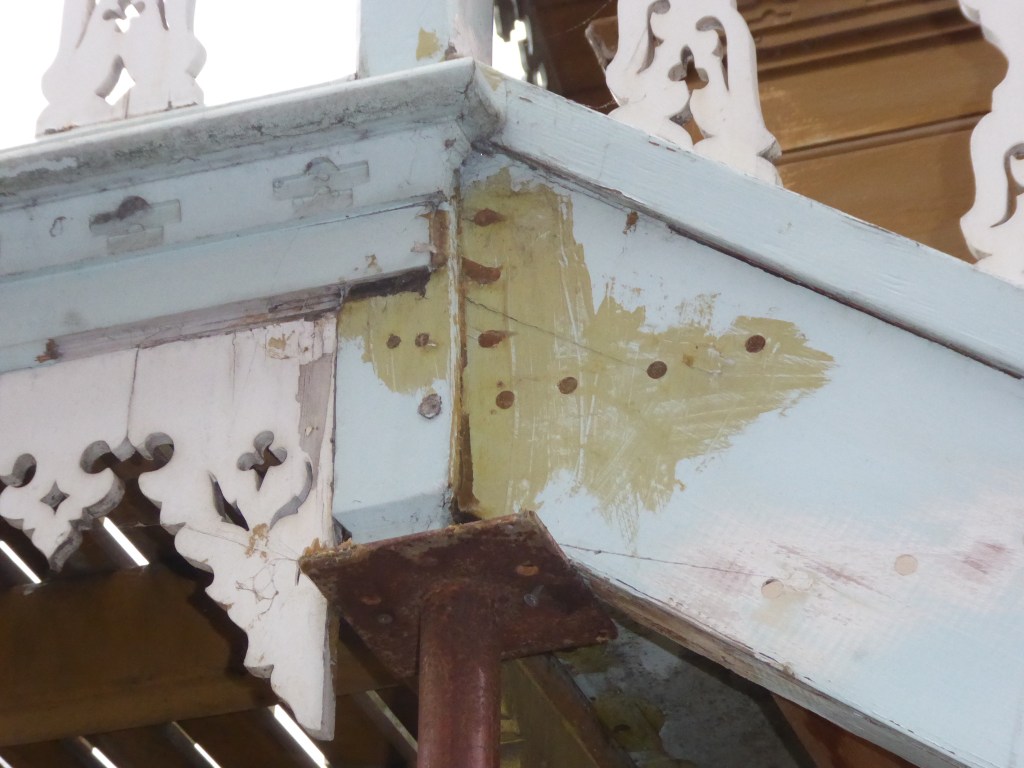
Ambitious and deliverable proposals need to be prepared for the use of the Chalet—with some relevance to Dickens and literature. Our ambition must go beyond the Chalet being just a tourist attraction. It will always be that. It could and should be so much more—building on Charles Dickens’ literary legacy, not just honouring it.
Funders of any restoration will not see a fiscal return on their investment. Any profits accruing from the operation of the Chalet will most likely be consumed by its maintenance. Funders will need to see societal benefits for communities and individuals. It would be all the better if those activities address matters of local and national priority.
A realistic and beneficial vision for the restored Chalet is therefore needed. It may take a number of years to deliver. But without a clear vision, a ‘delivery plan’ cannot be developed. Without a ‘delivery plan’, potential high-value donors are unlikely to contribute to the Chalet’s restoration.
‘Starter for Ten’ – building on Dickens’ legacy as a storyteller
There is a wide range of evidence that proves the benefits of storytelling. It enhances empathy, communication, creativity, and critical thinking. Stories can help improve one’s memory and language skills. In short, it’s a powerful tool for learning. It aids in personal expression. It also helps in building connections between people of all ages and backgrounds.
Could the Chalet become a focal point or Resource Centre in Medway? It might collaborate with Eastgate House and Rochester Library or Adult Education. Together these facilities could champion story-writing and telling through various media.
I offer this proposal as a possibility but also to stimulate thoughts about other ambitious possibilities.
Harnessing the Power of Storytelling
Storytelling can bring pleasure. It can be used to explain, unite, motivate, and heal. Storytelling can make connections between people, places, and events.
Dickens was said not to have wanted a monument. He may have felt differently had he been asked about a legacy. He was a highly skilled storyteller. Using the Chalet to advance storytelling could be a valuable and relevant way to present Dickens’ legacy. It could also benefit the well-being of communities and individuals.
This could be achieved through a number of avenues. All related to storytelling but have relevance to different communities and achieve different outcomes.
1). Celebrating Heritage

The physical environment of the Chalet. The Chalet was an early example of a factory-built prefab. A building, though, is also far more than its architecture. The Chalet was a place to which Dickens ‘retreated’ to work. It therefore needs to be seen as much as a social artefact as a physical one. (See Dickens’ Writing Chalet.)
Rochester/Chatham’s literary past, which includes many writers who have developed new genres. This heritage is not widely recognised in Medway— if at all. (See Inspiring Future Writers at Dickens’ Chalet.)
2). Creating a vibrant street scene

Activities and events laid on/delivered from the Chalet would bring economic benefits to local traders. (Trade in the Eastgate area significantly increased when Eastgate House opened as the Dickens Museum. Today there is very little to draw visitors away from the vicinity of the cathedral and castle.)
3). Promoting literacy outside of the traditional settings.

2.4 million adults in England can barely read or cannot read at all. Traditional ways of learning have not worked for them. Perhaps being helped to tell their story rather than being taught how to read and write could be more effective? This could create the motivation to develop these skills. Neurodivergent students may need help to discover their way to engage with reading materials and ways to tell their story.
4). Developing writing and storytelling skills.

Workshops and storytelling sessions could enable people to develop skills for recreational purposes and for work. There’s a story in all of us— but not all have the means to tell it through traditional means. Stories can be conveyed in many different ways today. (Dickens provided many opportunities for young writers and excluded people (women) to get their work into print.)
Stories help with interpretation and making information more memorable.
5). Promoting community coherence through ‘storytelling’.

Stories can create mutual understanding and empathy. Stories can also help foster understanding between diverse cultures. Storytelling could also be used to provide an alternative to divisive narratives— particularly important today.
People and communities can experience or perceive the same event in widely different ways. Many of Dickens stories have been given the Bollywood and Nollywood ‘treatment’— same social predicaments manifested differently within different cultures.
6). Promoting mental wellbeing through bibliotherapy.
Stories and storytelling can help people/young people to reflect on their situation by considering the situation of fictional characters. (Evidence has shown that guided reading is an effective tool— particularly with people experiencing anxiety or depression. A number of health trusts are using bibliotherapy as a means to “Improving Access to Psychological Services”. Dickens’ work is full of victims, survivors, and abusers— personal and institutional.)
(Virginia Giuffre, in her posthumous memoir Nobody’s Girl , wrote, whilst being abused as a young girl, she repeatedly read “Black Beauty” by Anna Sewell. The story is about suffering and injustice told from the perspective of the horse, Black Beauty. Horses can’t tell us how they feel, “but they do not suffer less because they have no words.” This shows that a novel, written over 100 years ago, can have relevance today— although it may need to be reworked into the language of today. Virginia also, as an abused child, drew some comfort from watching Cinderella on the loop. The story deals with mistreatment and powerlessness but also resilience and hope.)
Delivery Plan – Possibilities?
This will be complex for a project such as this. As a Community Interest Company, it will be necessary to establish a ‘Community of Interests’. Possibilities include:
- Oral History Medway – “dedicated to uncovering and preserving the stories of under-represented communities in the Medway Towns.”
- Chatham Intra High Street Heritage Action Zone – “a cultural and creative hub with a rich mix of artists and creatives”.
- Chatham Historic Dockyard – stories relating to the dockyard and dockyard workers.
- Short Brothers Aviation Heritage Community Interest Company – telling stories of Short Brothers and aviation pioneers from Kent & Medway.
- The Richard Watts’ Charities – connecting with the stories of travellers who stayed at the Six Poor Travellers’ House.
- The Huguenot charities – telling stories of migrants. Why they came, how they were received, the changes they brought about. The Huguenots were perhaps the first to provide compassionate care for those with mental health problems. Cripplegate Hospital.
- NHS mental health services, local counselling services, and dementia services. Activities and the operation of the Chalet could be part of the NHS’s Social Prescribing programme. This programme aims to connect people to activities, groups, and services in their community.
- The National Literacy Trust operates in Medway. It works with local schools, communities, and libraries to improve the literacy skills of young people and adults. There is also Read Easy in Medway.
- Universities at Medway – could teachers in training provide workshops on creative writing or teach literacy as part of their training?
Respecting the Chalet.
The Chalet is mainly made of softwood. It was also not designed and constructed to be a public building. It could therefore not sustain heavy usage— particularly the access to the upper storey. Usage will need to be restricted to delivering high-value benefits with low-impact usage.
The devil will be in the details, but access to the upper storey would particularly need to be restricted and controlled. It could be used for small group meetings or workshops.
Access at other times could be limited by ticketing. Alternatively, the venue might open for only a limited part of the year. For example, Restoration House opens only for two days per week, between June and September.
Please join the debate. Email your support or alternative ideas to hello@charlesdickenschalet.co.uk.
Geoff Ettridge aka Geoff Rambler. geoff.rambler@me.com
29 Sept 2025
Other related blogs
 Geoff Rambler's weird and wonderful Kent
Comments are closed.