

The term ‘Peasant’s Revolt’ is a misnomer. Support for the rebellion involved many more than the ‘peasant class’ – it was an uprising of the common people. The title ‘Peasants’ Revolt’ was coined by John Richard Green in 1874.1
The Peasants’ Revolt is not simply about the Poll Tax or the indecent verification of the age of teenage girls, as presented in some popular histories – it is a moralistic story that has pertinence today. It’s about the consequence that can follow when people who should be holding the country together misuse their authority, and when more is demanded of those – who have no more to give.
Medieval society could crudely be devised into two groups – the ‘exploiting class’ comprised of the King, nobles, clergy, and masters, and the ‘exploited class’ comprised of peasants, hired labour, village artisans, apprentices, and unskilled town labourers.
Many web-sources, citing the Peasants’ Revolt, attribute the uprising to the introduction of the Poll Tax. The situation and circumstances were far more complex as indicated by the ‘demands’ made by the leaders of the uprising. They wanted:
- The abolition of serfdom
- Repeal of laws, brought in after the Black Death, that capped wages to the pre-plague level, and restricted the changing of ‘employer’.
- Freedom to fish and hunt
- The Crown to be the only authority in the counties, not local lords
- Redistribution of the Church’s riches
Lead up to the Uprising of the “Great Revolt”
It is difficult to be sure of the timeline of the events that led up to the uprising. It is only as events unfolded that attention was given to recording who did what, when and where.
A number of authors have presented their history of the Peasants’ Revolt as linear, but it seems to me that the events in Kent at this time were chaotic. There was a group working to an ‘agenda for change’, but there were others who took the opportunity to seek revenge for past injustices.
The resentments that led to the uprising had been festering for over 35 years following an outbreak of the Plague that spread across Europe. Post pandemic wage restraints were introduced as was a tax that was levied to fund the war with France that’s now referred to as the “100 Year War”; 1337-1453.
Incitement caused by the Poll Tax Commissioners / Inquistors
The tax introduced in 1380 was the third time a tax of this type had been introduced. On this occasion the tax was 12 pence on every person aged over 15 years – wives and ‘grownup’ children, regardless of their income or assets. This amount was equivalent to four days pay for an unskilled labourer; whereas Richard Scropes, the government minister who introduced the tax was earning £600 / year. 2 The incitement to rebel though may have been less about the tax. It may have been more about the way the ‘collectors’ conducted themselves in the collection of the tax and enforced other matters.
The tax was undoubtedly resented and many would have chosen not to pay or were unable to pay it. This resulted in a significant ‘under-collection’ – or did it? It has been suggested more tax was collected than arrived in the treasury. This implies that there could have been corruption in the system. This could explain why commissioners were required to collect information about who had paid as well as those who had not.3
To tackle this problem Commissioners were sent out from London to record who was liable to pay the tax and who had paid. According to the Anonimalle Chronicle there were incidents where families claimed a girl was under 15 years of age, and the commissioners insisted on ‘examining’ the girl to verify this. [I would imagine the threat of this ‘humiliation’ may have been sufficient to make some families to ‘pay-up’.]
Although often repeated on the internet there is no evidence that the uprising was triggered by a Poll Tax collector wanting to ‘age-verify’ the daughter of Wat Tyler – who became the leader of the Kentish rebels.
Independent chroniclers of the time were on the opinion that the rebellion was a direct reaction to the unscrupulous activities of the tax collectors. 4 (One has to be careful with this accounts as they could have been scewed in favour of the king.)
Resentment of being conscripted to fight in France
There was also resentment growing in the southern counties about being conscripted into the military to fight in France. Accounts of the uprising suggest a number of men with military experience, or deserters from the military, participated in the rebellion.
By 1380 there was growing concern about the number of men-at-arms and archers who had taken a payment to serve but then deserted before departing for the continent. Many appear to have taken refuge around Rochester and Maidstone.
Under the threat of “forfeiture of grace” (dismissal) bailiffs for Aylesford, Maidstone, Rochester and “Newenton” (Newington?) were instructed to find and imprison men who had deserted – until it was decided what to do with them.5 It is therefore quite probable that there were a number of such men, free or imprisoned, in and around Rochester and Maidstone, “Storm-centres” of the revolt, who would have been well-disposed to support the rebellion.
When peoples have no more to give, and in turn nothing to lose, it’s not going to take much to ignite a rebellion.
What were the triggers?
As the ‘Peasants’ Revolt’ was primarily a Kent and Essex rebellion I’m left wondering whether compulsory military service was more of a ‘trigger’ than the Poll Tax which, although widely avoided, did not lead to rebellion elsewhere.
Men from Kent and Essex would have been living in coastal towns from which they could be deployed to the continent. 1381 would not have been a ‘good time’ to be deployed to France with the English on the ‘back-foot’ by this time. In 1360 the French had been forced to cede control of the Calais area to the English, but by 1380 much of this land had been retaken by the French.6
It is equally possible that the Poll Tax Commissioners, as a consequence of their proximity to London, could have been more zealous in seeking out Poll Tax evaders in Kent and Essex. In May 1381 instructions were issued to the Commissioners requiring them to collect the required information concerning those who should / have paid the Poll Tax, “by means which seem best to [them]”. The general instruction was issued for Kent on 3 May 1381 and 17 days later, specifically to the Commissioners responsible for Canterbury.7
The truth is that there was so much being inflicted on the common people in the southeast that would have fuelled resentment and caused the population of this region to rise-up against those inflicting the most ‘distress’.
Outline timeline
Drawing on the Chronicle of Jean Froissart and the Anonimalle Chronicle the following sequence seems logical.
2nd June 1381– Attack on Lesnes Abbey: Abel Kerr from Essex but based in Erith, (in Kent at the time) led peasants armed with farm tools to attack Lesnes Abbey – now in what we know as Abbey Wood/Bexley. The purpose of the attack may well have been to destroy the Poll Tax records kept there.
5th June – John Belling was arrested at Gravesend by Sir Simon de Burley. Belling was accused of being a runaway serf. This led to local outrage. de Burley offered not to arrest Belling if he was paid £300 in silver. (Evidence of self-serving corruption on the part of someone with responsibility for the county?) Being unable or perhaps unwilling to part with this amount of money Belling was imprisoned in Rochester Castle.
Whether it was connected or not is not clear, but on the same day Abel Kerr held a meeting at Dartford where he incites the town to rebellion.8
6th June – Rebels besiege Rochester Castle to secure the release of John Belling.

This may have been the first of two visits by the ‘rebels’ – first on 6 June, the second, on or around 11 June – see below.
First ‘Visit? Release of John Belling. For a day and a half the rebels led by Robert Cave (a baker from Dartford?), surrounded the castle. Amongst those besieging the castle was Thomas Wooton, an archer who had jumped ship whilst en route to fight in France.9
The rebels had no prospect of forcing entry into a castle with the fortifications of Rochester. Sides of the castle that were not protected by the river were protected by a 20 foot ditch. The tower was 60 feet high and the walls 12 feet thick. However the doors of the castle were eventually opened to them. It’s reasonable to assume that the ‘staff’ of the castle-prison could have shared the resentment of the protestors, but they may well have felt intimidated and threatened by the size of the crowd that would have amassed around the castle.

On gaining entry to the castle the rebels released Belling and other prisoners. They may well have destroyed Poll Tax records and inflicted considerable damage on the castle.
The evidence for this destruction though is circumstantial and is inferred from Richard ll spending what was a considerable amount on the castle after the siege. Between 1384 & 1388, £66 10s was spent on the castle. Between 1395 & 1397 a further £91 13s was spent on the castle. The reasons though are supposition.
The war with France was continuing and a new bridge was being constructed between Rochester and Strood – completed in 1391. Rochester therefore would have been an important defensive position. As Richard funded the construction of the drawbridge in the middle of the new stone bridge, I suspect he would have also wanted to ensure the castle was ‘battle-ready’ – irrespective of any damage the ‘rebels’ may have inflicted on the castle.
Although it’s possible the people from Gravesend returned home – “in great joy”10 – with their mission completed, there would have been others – particularly from Dartford – who would have been minded to move onto Maidstone to pursue their grievances.
7th June – Rebels arrive at Maidstone gathering on Penenden Heath. Here Wat Tyler (a “wicked and nasty fellow” 11) is elected their leader. Not much is known about his background. If it’s correct that he issued an instruction to all men who lived within 12 leagues (approx 36 miles) to return to the villages12, in case the French decide to invade, this would suggest he had military experience. (It is also reported that a similar instruction was given at Dartford – “to keep the sea-coasts free from enemies. 13)
Having organised their leadership and agreed a mission, it was decided to rescue John Ball – who Froissart called the ‘mad priest of Kent’ – from Maidstone Prison / Archbishop’s Palace.

He was apparently being held by the Archbishop of Canterbury for being an unlicensed preacher whose teachings undermined the traditional views of the Church. He would preach in churchyards to people leaving a Sunday service. By later standards he was an early advocate for the reform of the Church in that he demanded the liberation of the Church’s wealth in order to better provide for the poor and the sick.14 His preaching was based on the teachings of John Wycliffe.

There would appear to have been an unruly element involved in the rebellion. At Maidstone a considerable amount of damage was inflicted.15 Along with “head people” who were murdered, the homes of those who refused to join the rebellion were also destroyed. Court records pertaining to the post-rebellion trials show that an unnamed woman was accused of encouraging a group to attack the prison at Maidstone.16
8th June – The people of Yalding join the rebellion. 17
8th/9th June – Wat Tyler and ‘rebels’ march to Canterbury. Reinforced and with the organising leadership of Wat Tyler and John Ball, the protestors headed to Canterbury. Their intention was two fold. First to capture or perhaps execute Simon Sudbury who was the Archbishop of Canterbury and an enthusiastic supporter of the Poll Tax, and secondly to install John Ball as the Archbishop.
10th June – The rebels receive an enthusiastic welcome at Canterbury. The castle and the Archbishop of Canterbury’s palace are ransacked. (By 1349 the Archbishop’s Palace was a large complex of buildings.18) Wat Tyler and Abel Kerr broke into the local gaol and released four prisoners who were being held there in chains. They also destroyed the ledgers and registers used to administer the hated Poll Tax. They also asked the inhabitants to identify men who had been agents of the government; they were found and executed. Simon Sudbury though was not found; he was in London.


11th June – The Kent rebels leave Canterbury for London London.
11th June? – Second ‘visit’ to Rochester? / the taking of Sir John Newton as a hostage. Having decided on their strategy Wat Tyler and approximately 500 supporters (men and women) made their way to London to make representations to King Richard, aged 14.
It seems unlikely to me that the crowd that secured the release of John Belling would have, at that time and without leadership, thought of taking Sir John Newton, Constable of the Castle, hostage to assist in representing their cause. This though would have been an appropriate action once the rebels had established a leader and their cause. The wording of the record of this event suggests familiarity with the rebels’ cause – beyond seeking the release of John Belling. Could Rochester Castle therefore have been visited again by rebels whilst en route from Canterbury to London?
At Rochester it was recorded that the ‘delegates’ were well received as the people of “Rochester were of the same sect”. Here they asked Sir John Newton, Constable of the castle, to join and act for them. Froissart’s account suggests Newton made many excuses but finally capitulated on the threat of death. Another source also suggests that Newton’s children were also taken hostage. 19 (If this was the case it woudl appear that the castle could have been the familiy home of the Newton’s, and the ‘castle garden’ the children’s play area?)
12th / 13th June: The “wicked mob of people” from Kent arrive at Blackheath on the outskirts of London and soon meet up with rebels from Essex.
Sir John Newton is sent to make arrangements for the ‘rebels’ to meet with the King. Newton delivers the message and begs the King to give him an answer to take back as his children were being held as hostages for his return.
14th or 15th June : Wat Tyler and others meet Richard ll. During the meeting Sir John Newton insulted Tyler, calling him a thief.20 During the ensuing ruckus Wat Tyler was stabbed and then beheaded – perhaps whilst in hospital?21 Wat Tyler died on 15th June.
Leaderless and having secured some concessions from the King, the Kent ‘rebels’ headed for home.
23 June: Richard reneges on that which was agreed and instructs his Knights to find and punish the ringleaders of the uprising.
15 July: John Ball is executed at St, Albans.
30 September – Peasants seek to retake Maidstone: Thomas Hardying assembled a meeting at Boughton Heath of Kentish artisans and craftsmen from the disaffected villages of Loose and Linton. They were betrayed and arrested. Ten were found guilty and executed for treason. John Monselow of Marden was accused of plotting to burn down Maidstone but was found to be not guilty.22
King Richard outraged by this new insurrection threatened to “remove the entire race of Kentishmen and Jutes from the land of the living”. He was though persuaded that this uprising was the action of a minority.23
Many undatable events
The following gives some indication of the chaos that reigned in Kent during the period of the rebellion.
The homes of Thomas Shardlow (Dartford) and Elias Raynor (Strood) were entered and documents were taken and destroyed.24
The ‘rebels’ also had control of Watling Street between Canterbury and London. Jean Froissart recorded that along the route to London the rebels destroyed the houses of lawyers and judges, as well as cutting off the heads of a number of men.25
“They drew in all the people from the villages they were near and they passed by like a tornado, levelling and gutting the houses … so those wicked men went raging about in wild frenzy.”
On the 8 June the rebels levelled and pillaged the North Cray home of Nicholas Herring – a royal official in Kent, and consequently a wealthy man. John Houtekyn of Malling and Robert Wronge of Trottiscliffe were later indicted for this crime.26 On 11 June, John Ellis, a master of a Salinger – a small boat used to counter French raids – seized land and livestock on Isle Sheppy that belonged to Nicholas Herring.
Rebels Reach London
There was a blood-fest in London with many of the rebels running amok. Many who were regarded as being part of the ‘expoilting class’ had their proprty taken or destoryed, and many were murdered. These included Simon of Sudbury Lord Chancellor / Archbishop of Canterbury who Wat Tyler denounced as “a traitor who will be beheaded for his iniquity” 27

Murder of Subury, Sir Robert Hales, Treasurer of England, and the prior of the Hospitallers and British Library, CC0, via Wikimedia Commons
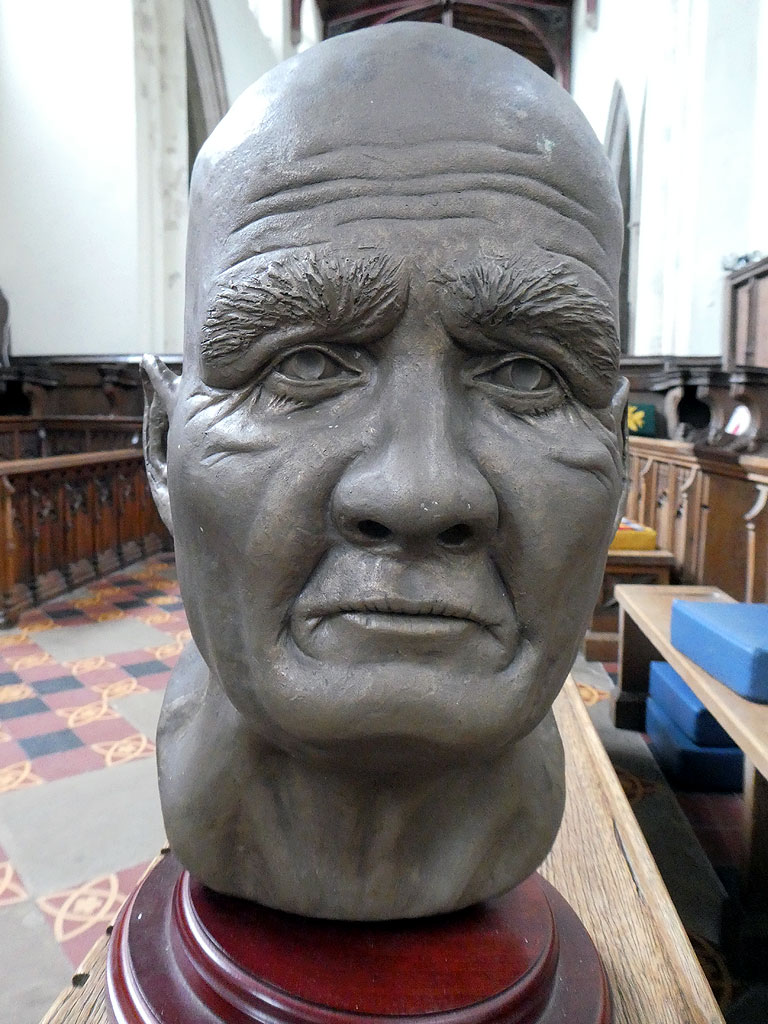
(The body of Simon Sudbury is buried in Canterbury Cathedral – with a canon ball in place of his head. There is an ancient tradition – restarted in 1978 – where a Christmas Rose is placed on Sudbury’s tomb on Christmas Day in recognition of the good works he undertook for the city. It may have previously been a wreath of red roses. He may have be responsible for a lot of the building of Canterbury but I’m not sure why it has been decided to resurrect this custom when Sudbury and other members of the Church impoverished the earthly lives of those who worked the Church’s land? )
Hundreds of others were murdered including Flemish merchants who were dragged from the churches in which they had sought sanctuary. This anarchy did not help the legitimate call for reformation.
Court papers described Johanna Ferrour, from Rochester, as the “chief perpetrator and leader of rebellious evildoers from Kent”. She was accused of ordering the death of the treasurer, Robert Hales, and was charged with burning down of the Savoy Palace – the grandest townhouse in London at the time – that belonged to John of Gaunt.28 There is no record of her sentence but one unattributed source state that as she appeared in later court papers suggesting she was not executed. (Johanna Ferrour’s husband was apparently involved in the siege of Rochester Castle, and the destruction of the home of John Gault.)
There was rioting in Gravesend and Faversham. Houses were destroyed in Frindsbury and Sittingbourne, and in Bordon a John Godwot was killed.29 Using his skull that is kept at … it has been possible to reconstruct what Sudbury may have looked like.
There is an account of the ‘rebels’ stopping the carriage of ‘Joan of Kent’ the Kings mother, as she returned to London from a pilgrimage to Canterbury. She managed to persuade the ‘rebels’ to allow her to continue to London. There are some fanciful accounts of this meeting but allowing her to continue and facilitate a meeting with the King, would be consistent with the reasoning for taking Sir John Newton as a prisoner.
Retribution
The King also sought revenge. John Ball and Jack Straw (another of the rebellion leaders – possibly a priest under an assumed name.30) were executed and their heads, along with that of Wat Tyler were displayed on London Bridge.
The King also sent ‘investigators’ out into the country to arrest any rebels. Many were arrested – turned in by their neighbours – and executed.
According to Froissart the King ‘visited’ Kent to purge and punish the ‘evil-doers’. Specifically mentioned was Ospringe, near Faversham, Canterbury, and Sandwich. There is some doubt whether he actually visited these places, but his agents may well have, and accounts of what happened in villages and towns across the area is probably accurate.31 If the agents of the Crown were lawyers or judges one has to assume they would not have been inclined to show clemency as so many of their profession had been murdered during the uprising.
The mayor and other community leaders would be summoned. After being given a dressing down and threatened with execution, they were required to identify people who had been involved in the rebellion. Those so identified were arrested and executed. Upwards of 1,500 people from Kent and Essex were executed.
And Finally?
I stress that I’m not an historian but from my readings I suggest that the actual Poll Tax was periphery to the cause of the Peasants’ Revolt. It could have been more about:
- Breaking away from the enslavement of serfdom.
- Overly zealous enforcement of laws by local officials.
- Local law/rule making – enforced with imprisonment or other public punishments.
- The taking of bribes and payments to avoid imprisonment.
- Conscription into the military and being sent to an ‘active’ frontline.
- Restrictive hunting & fishing rights – essential for families being able to feed themselves.
The rebels swore loyalty to the King – they were rebelling against those who had control over the day-to-day running of affairs.
The above has been collated and presented by a human!
Geoff Ettridge aka Geoff Rambler
30 May 2023
Sources
- 1381.online. Accessed 25 May 2023.
- The Life & Legend of a Rebel Leader – Wat Tyler. 2018, Stephen Basdeo
- Communist (London) – 24 June 1922
- Henry Knighton, cited in Peasants’ Revolt of 1381. Ed. R B Dobson. P135.
- The Peasants’ Revolt of 1381, Edited R B Dobson.1983. p95
- https://www.history.com/topics/middle-ages/hundred-years-war. Accessed 20 May 2023.
- The Peasants’ Revolt of 1381, Edited R B Dobson.1983. p122
- The Peasants’ Revolt of 1381, Edited R B Dobson.1983. p39
- The Untold Story Of The 1381 Peasants Revolt. https://youtu.be/4kq9sbtFCR8
- The Peasants’ Revolt of 1381, Edited R B Dobson.1983. p127
- From the translation of Jean Froissart’s contemporary Chronicle – probably written between 1369 and1373.
- Summer of Blood, Dan Jones, 2009. p61.
- The Peasants’ Revolt of 1381, Edited R B Dobson.1983. p126/127
- Jean Froisssart’s Chronicles
- The Peasants’ Revolt of 1381, Edited R B Dobson.1983. p127
- BBC News Magazine, 14 June 2012.: https://www.bbc.co.uk/news/magazine-18373149. 14 June 2012.
- https://spartacus-educational.com/YALDchronology.htm. Accessed 26 May 2023
- The Archbishop’s Palace. Canterbury Archaelogical Trust
- Froissart’s Chronicle. http://www.hoasm.org/IIIC/PeasantsRevolt.html. Accessed 22 May 2023
- https://architectsforsocialhousing.co.uk/2017/03/31/the-peasants-revolt-lessons-from-history/. Accessed 13 May 2023
- https://www.historic-uk.com/HistoryUK/HistoryofEngland/Wat-Tyler-the-Peasants-Revolt/.. Access 13 May 2023
- http://www.mardenhistory.org.uk. Accessed 16 May 2023
- Thomas Walsingham – cited in The Peasants’ Revolt of 1381. Edited R B Dobson.
- The Peasant’s Revolt 1381 and the Written Work. Martha Rampton. 1 Oct. 1993
- Froissart: Chronicles. Account of the 100 Year War. Jean Froissart. 14th century.http://www.hoasm.org/IIIC/PeasantsRevolt.html
- London Radical Histories – accessed 12 May. https://pasttense.co.uk/2016/06/08/today-in-the-edge-of-londons-history-revolting-peasants-plunder-a-rich-mans-house-north-cray-1381/
- Kent on Line, 26 June 2021. https://www.kentonline.co.uk/canterbury/news/it-took-eight-attempts-to-chop-off-his-head-249386. Accessed 28 May 2023
- https://www.bbc.co.uk/news/magazine-18373149. 14 June 2012.
- Summer of Blood. Dan Jones. 2010. p62
- North Star (Darlington) – 20 January 1886
- The Peasants’ Revolt of 1381, R B Dobson, 1983. p315
 Geoff Rambler's weird and wonderful Kent